

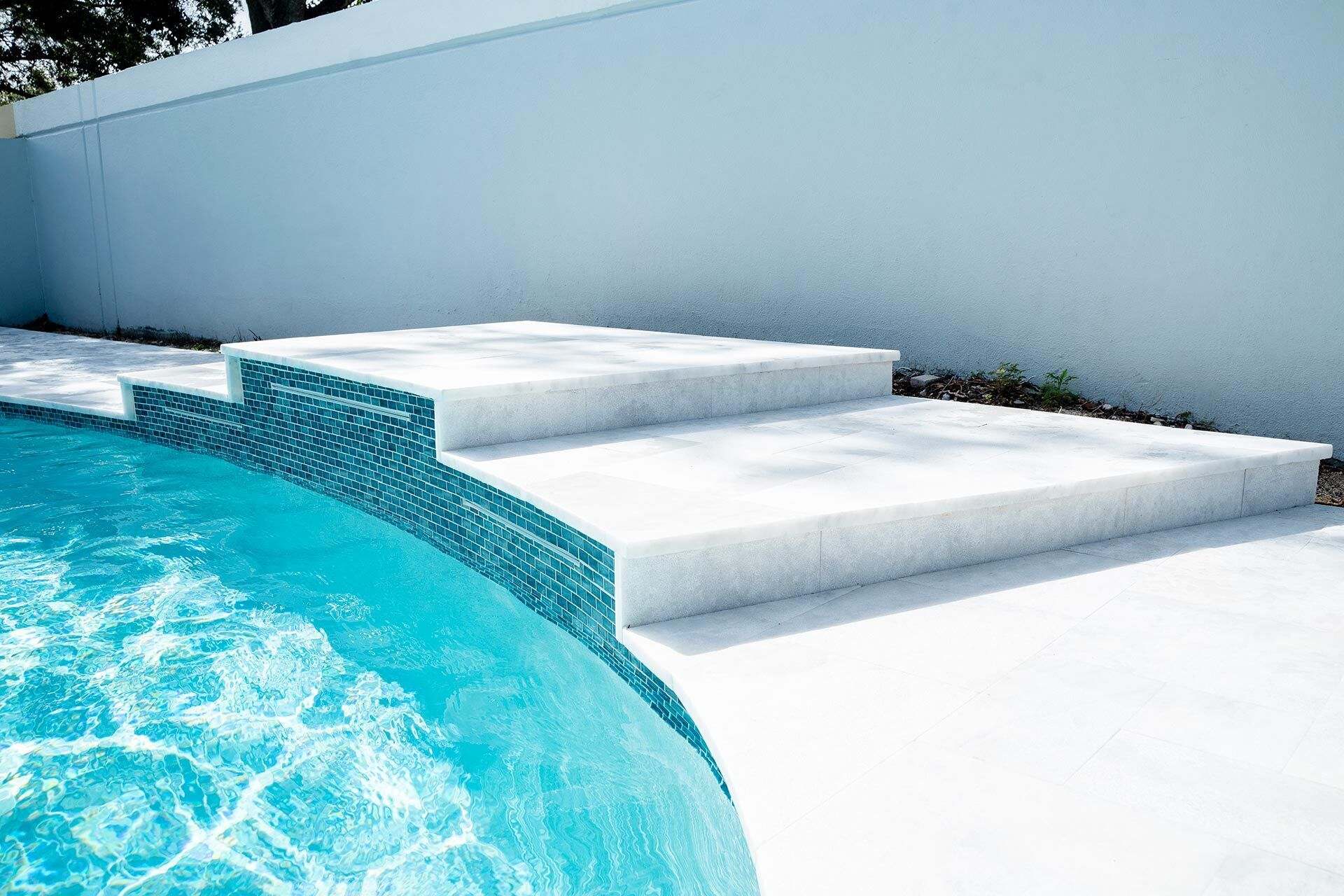
Pool resurfacing for a smooth, beautiful finish
Florida sun, heat and pool chemicals wear every finish down. A new interior makes the pool smooth underfoot, easier to clean and beautiful again.
A finish that feels as good as it looks
If your pool is rough on the feet, stained, cracked or fading, it is probably time to resurface. A new finish fixes the surface problems, makes the pool easier to keep clean and changes the color of the water.
We resurface gunite pools in plaster, quartz and pebble, and we refinish fiberglass pools too. Every job starts with an inspection, so you know whether resurfacing alone is enough.
- Inspection and a written, itemized estimate
- Draining and full surface preparation
- New plaster, quartz, pebble or tile finish
- Curing, refill and balanced water
- Care tips for the new finish
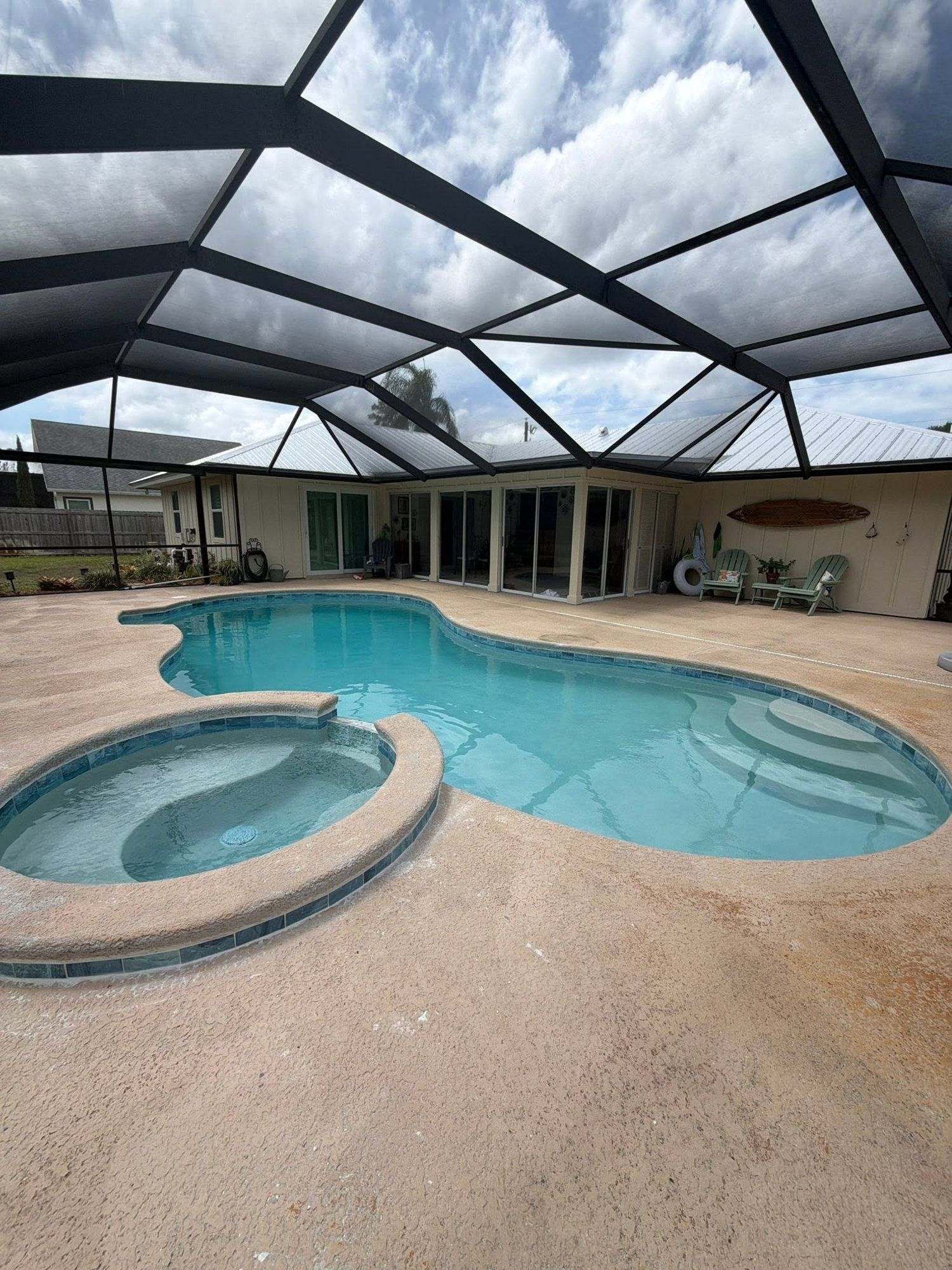
Signs your pool needs resurfacing
Rough or peeling surface
Snagged swimsuits and scraped feet mean the finish is wearing through.
Stains that won’t clean
Discoloration that brushing and chemicals can’t remove.
Cracks and chips
Surface cracks and chipped spots that keep spreading.
Losing water
Unexplained water loss can point to cracks or failed fittings, which we check before resurfacing.
An aging finish
Most finishes need attention after 10 to 15 years, depending on the material and care.
Finishes to choose from
Plaster
The classic smooth white finish and the most affordable option.
Quartz
More durable and stain resistant than plaster, in a wide range of colors.
Pebble
Natural texture, long life and the richest water color.
Tile
The premium choice for waterlines, spas and full interiors.
Fiberglass refinishing
A worn fiberglass pool can often be refinished instead of replaced.
How it works
- 1
Inspection and estimate
We assess the surface, explain your finish options and give you an itemized estimate.
- 2
Drain and prepare
We drain the pool and remove or prepare the old surface so the new finish bonds properly.
- 3
Apply the new finish
Our crews apply plaster, quartz, pebble or tile.
- 4
Cure, refill and balance
The finish cures, the pool is refilled and the water is balanced to protect it.
- 5
Final walkthrough
We review the work with you and share how to care for the new finish.
Pool Resurfacing projects on video
Real projects from our crews, filmed on site. Tap any video to watch.
Fiberglass refinishing
A dingy fiberglass pool under a screen enclosure, drained, prepped and refinished in a bright new color.
Fiberglass resurfacing
A worn fiberglass pool brought back with a smooth new finish.
Resurfacing walkthrough
A walk around a resurfaced pool with a new interior finish and tile.
Fiberglass resurfacing
An old fiberglass pool drained, prepped and painted start to finish.
Black plaster
Crews hand-trowel a black plaster interior on a large freeform pool.
Fiberglass refinishing
A fiberglass pool rolled out in a bold new blue finish.
Pool resurfacing
A fresh interior finish with tile accents on the steps, cleaned up and refilled.
Island Blue finish
A renovation finished in Island Blue with scallop tile accents.
What homeowners say
Pool Resurfacing FAQs
How often should a pool be resurfaced?
Usually every 10 to 15 years, depending on the finish and how the water has been cared for.
What is the best pool finish?
It depends on your budget and goals. Plaster costs the least, while quartz and pebble last longer and resist stains better. We bring samples to the consultation.
Can resurfacing fix cracks and leaks?
It fixes surface cracks. Structural cracks and leaking fittings need a repair first, and we check for both before we resurface.
Do you refinish fiberglass pools?
Yes. Fiberglass refinishing is one of our most common projects, and you can watch a few in the videos on this page.
Let’s design a pool you’ll be proud of.
Tell us about your yard and what you have in mind. We reply within one business day and schedule your design consultation within 48 hours.